Every one of us had the same evening. Sit down to do something that mattered, pick up the phone for one small reason, and look up an hour later with nothing done and a bad feeling about ourselves.
We blamed ourselves for years
That is what everyone does. You decide you are lazy, or that you have no discipline, or that something is wrong with your attention. Then you download another app to fix it.
We tried them all. Timers, blockers, greyscale, app limits, focus modes, the one your friend swears by. Every single one worked for a few days and then quietly stopped.
Then we noticed the pattern
Every fix we tried lived on the phone. The thing pulling at us and the thing meant to protect us were both inside the same piece of glass, running on the same processor, controlled by the same thumb. So the way out was always one tap away, and one tap is not a wall.
Software cannot stop what software started.
The only thing that had ever worked, for any of us, was leaving the phone in another room. But that was too blunt an instrument. You cannot take a call. You cannot check a message from home. You cannot see whether the delivery has arrived. So nobody stuck with it for more than a few days, ourselves included.
The problem was never that we wanted less phone. It was that we wanted less of four apps and all of the rest.
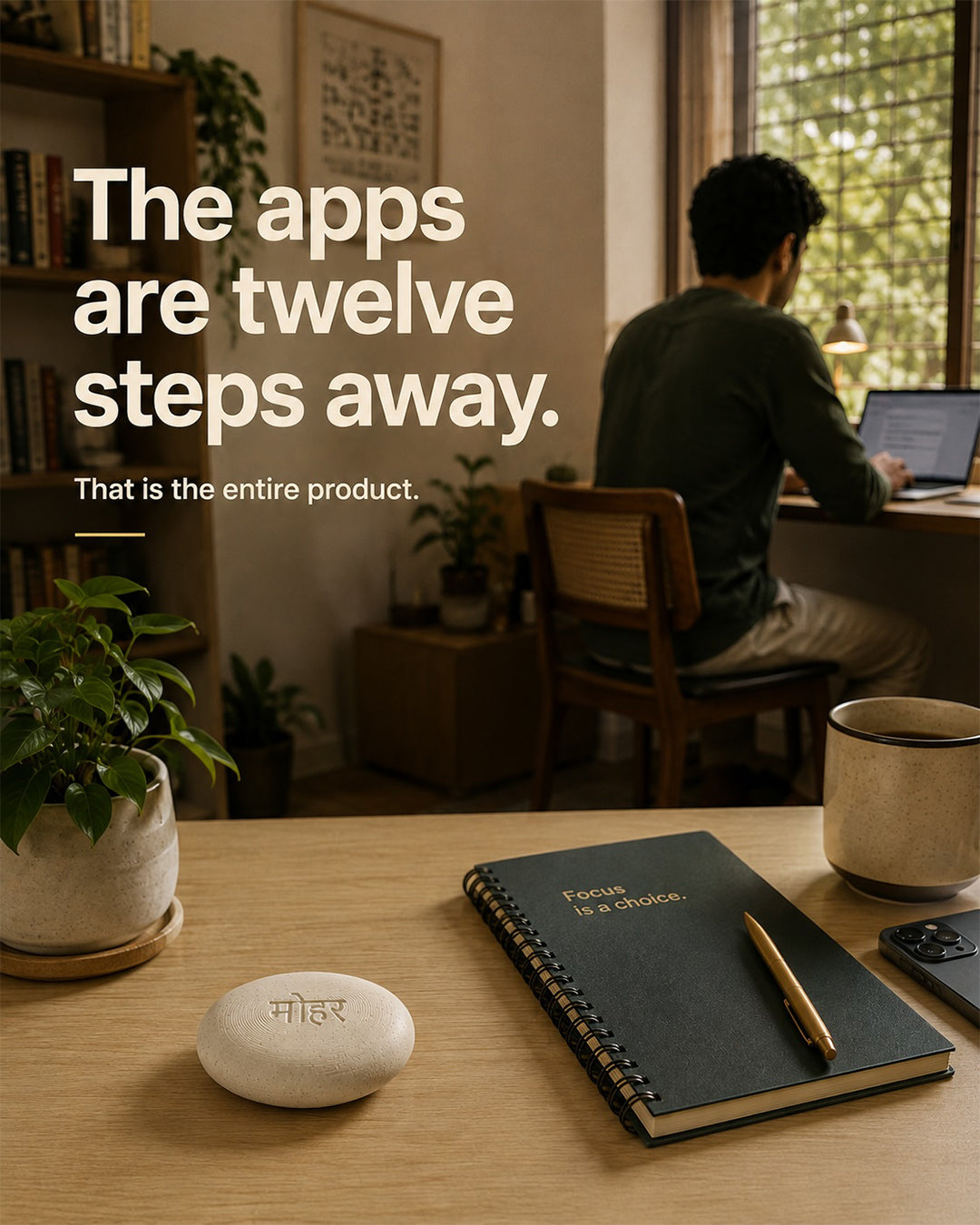
The only thing that had ever worked was distance. It was also the thing nobody could keep up.
What we wanted to build
Something with the strength of leaving the phone in another room, but without losing your phone. A switch that lives on your table instead of on your screen. Small enough to ignore. Solid enough that you cannot argue with it.
No battery, because things with batteries die on the night you needed them and end up forgotten in a drawer. No subscription, because charging somebody every month to help them use their phone less is the wrong business to be in. No tracking, because a product about protecting your attention has no business watching you.
We made about forty prototypes before this one. The first were plastic. They were light, they slid across the table, and within a week nobody noticed them any more. A thing you stop noticing cannot change what you do. So we went to device, and to something you would keep on your desk even if it did nothing at all.
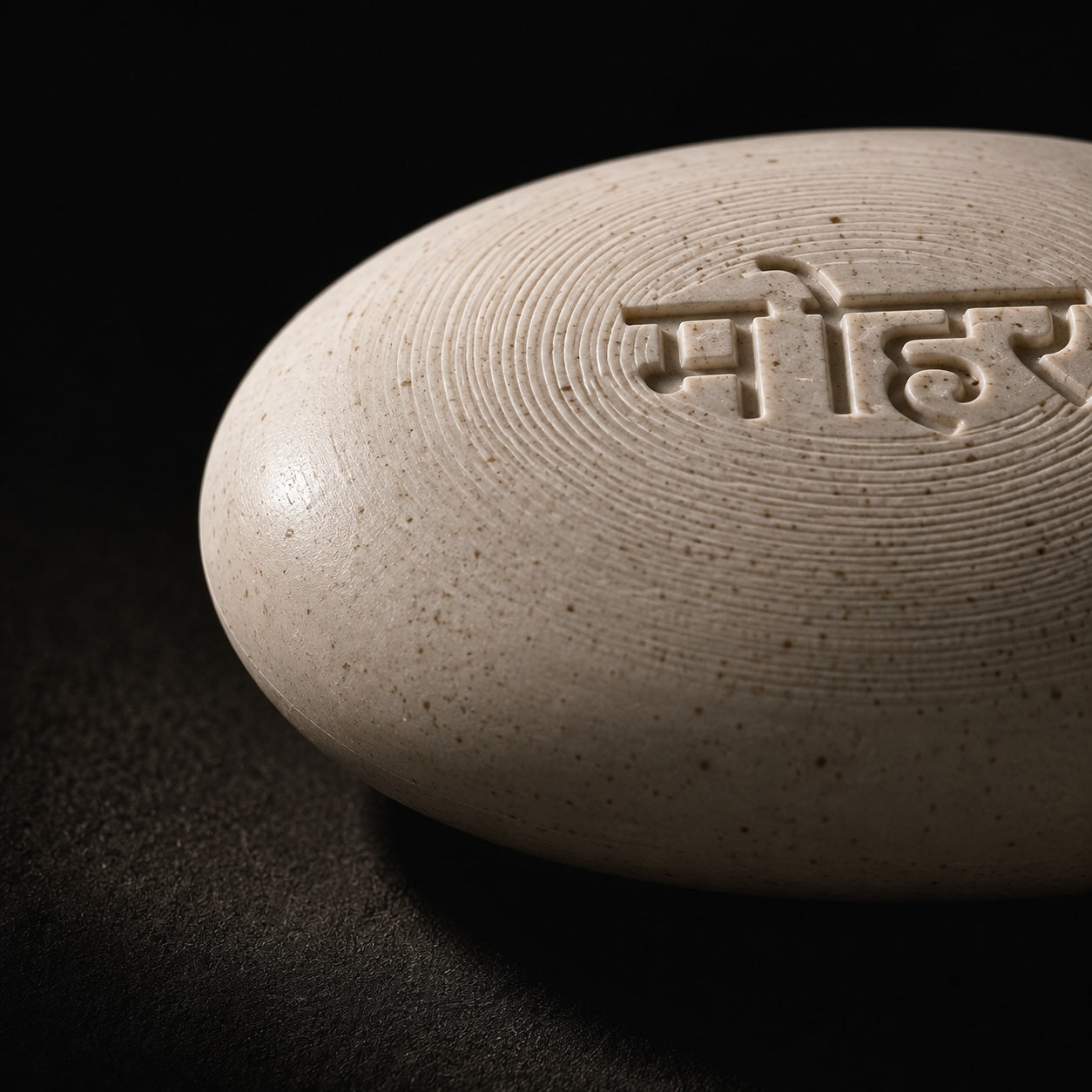
Cut and finished by hand, so no two are quite alike.
Where the name came from
A mohar is a royal seal. For hundreds of years across this subcontinent, pressing one onto something meant exactly one thing. This is decided. This is closed. There is nothing further to discuss.
That is exactly what a tap is. You are not making a promise to yourself that you will quietly renegotiate at ten past nine. You are closing the question and getting on with your evening.
What we will not do
- We will not track you. Mohar has no battery and no radio that can reach the internet. Your app list stays on your phone. We could not see it even if we wanted to.
- We will not charge you monthly. One payment, and the app is free forever.
- We will not sell you fear. No countdown timers, no invented scarcity, no made up statistics about your brain.
- We will tell you not to buy it when it is not right for you. There is a page on this site that does exactly that.
Mohar is made in India by a small team. We are not a large company and we are not pretending to be one. If something goes wrong, the person who replies to you on WhatsApp is one of us, and usually within a few hours.
What it is made of
Composite device, cut and finished by hand, then sealed so it does not stain. Inside it, a passive chip about the size of a grain of rice with a copper coil around it. That is the entire bill of materials.
There is no battery, no processor and no radio that can reach the internet. When your phone touches it, your phone supplies the tiny amount of power the chip needs in order to answer, in exactly the way a metro card works. The moment the phone moves away, the device is inert again. It is closer to a key than to a gadget, and that was always the point.
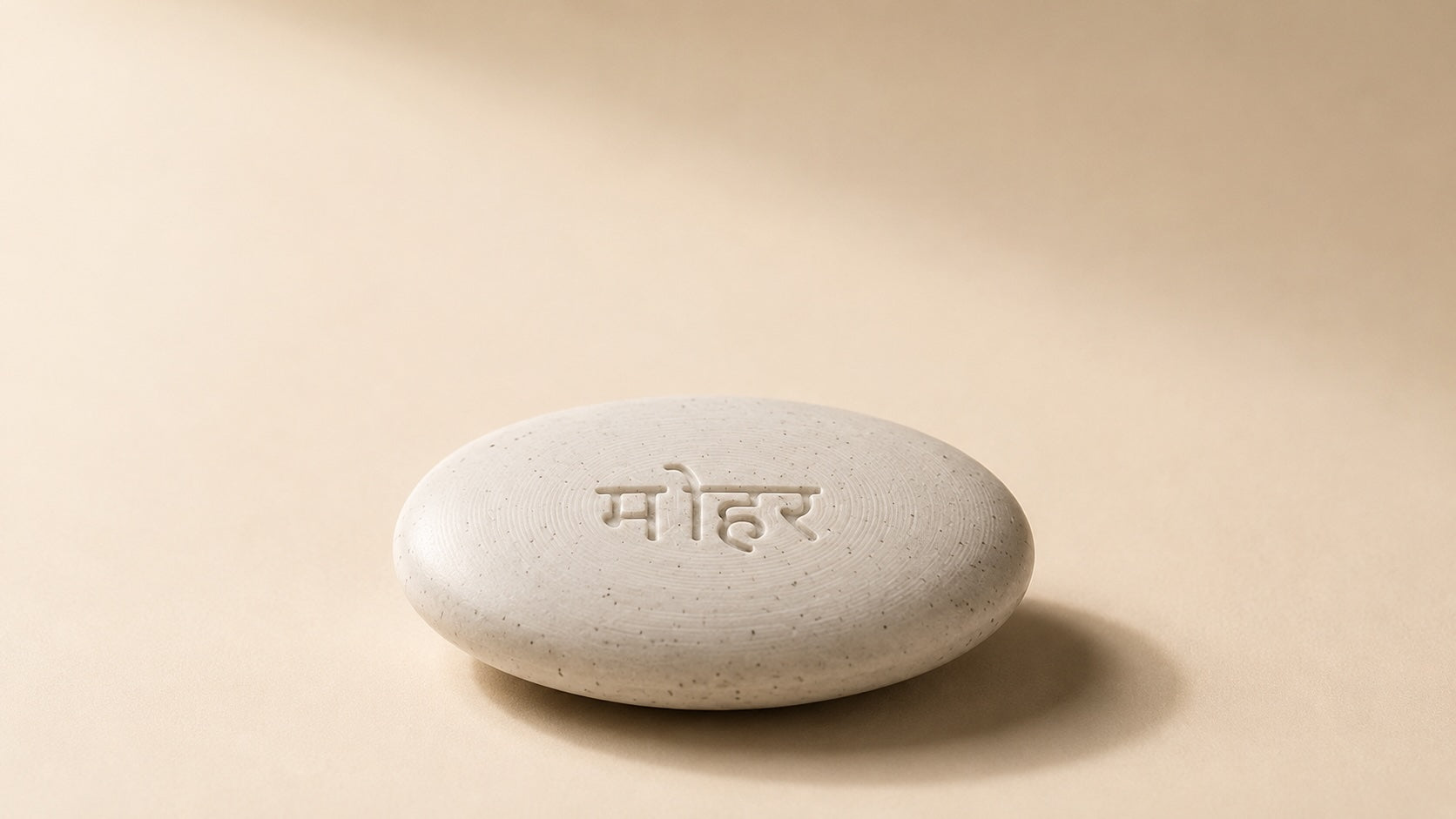
The fortieth prototype. The first thirty nine were plastic, and people stopped seeing them.
What we got wrong first
The first forty prototypes were plastic. They were cheaper, lighter and far easier to make, and every one of them failed the only test that matters. Within about a week, people stopped seeing them. A thing you have stopped noticing cannot change what you do.
We also tried making the lock harder. Timers you could not skip. Daily quotas. A waiting period before you were allowed your apps back. Every one of those made people resent the object, and a few weeks later the object was in a drawer. The version that works is the one that lets you undo it whenever you like, as long as you stand up and walk. Friction, not force.
What we are still getting wrong
We are a young company and there is no point pretending otherwise. Delivery to smaller towns still takes longer than we would like. The app does not have a Hindi interface yet, though it is being built. And we have not solved the case of the person who genuinely has to stay on WhatsApp for work, beyond suggesting they leave it off the list.
We would rather write that down here than have you find it out after paying us.
Seal the hour.
The Mohar team
Made in India. When you write to us on WhatsApp, one of us reads it and one of us replies.